

LEARJET 45/75 OVERVIEW
Among the light and midsize segments of private jets, there are some attractive options. The Embraer Phenom 300 has been the bestselling light jet for over a decade, and Cessna’s CJ series has also seen strong sales. The two manufacturers are powerhouses in the midsize segment, as well, with the Praetor 500 and Citation Latitude lines both performing strongly.
But, in a market where factory-new options start at over $12M and 10-year-old examples start at $8M, savvy buyers are seeking alternatives – and finding strong contenders. Here, we explore some particularly compelling options, the Learjet 40/45 and modernized 70/75.
TYPE OVERVIEW
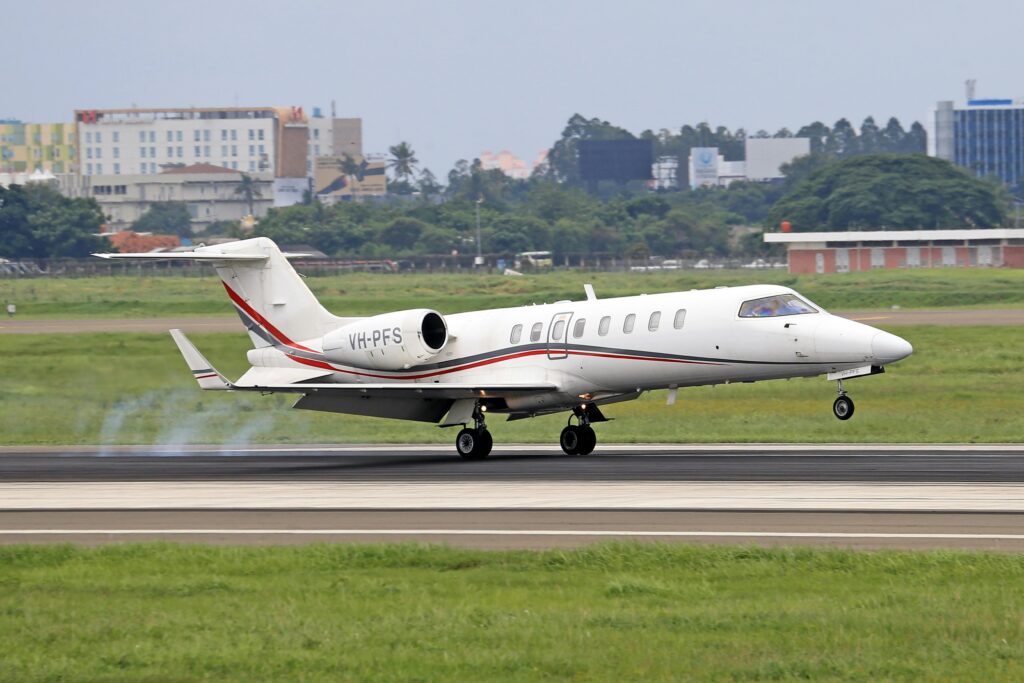
With lineage dating back to the jet-fighter-based Learjet 23, these modern descendants share the name and general appearance, but the similarities stop there. The 45/75 series began in the early 1990s with Bombardier’s announcement of a clean-sheet design, the 8-passenger model 45. 2002 saw the introduction of a shortened, 6- to 7-passenger version, the Learjet 40.
In 2004 and 2006, Bombardier introduced the 45XR and 40XR, respectively. In each case, the XR variant added uprated engines, expanded fuel capacity, and increased maximum takeoff weight.
In 2012, Bombardier introduced new, updated versions of each, with the 40 and 45 evolving into the 70 and 75, respectively. Here, visuals explain the model nomenclature and production numbers:
| MODELS | Short Fuselage(6-passenger) | Long Fuselage(8-passenger) |
| Initial Version | 40 | 45 |
| Modernized Version | 70 | 75 |
| NUMBER PRODUCED | |
| Learjet 40 | 37 |
| Learjet 40XR | 95 |
| Learjet 45 | 245 |
| Learjet 45XR | 209 |
| Learjet 70 | 14 |
| Learjet 75 | 155 |
LEARJET 45/75 MYTHS
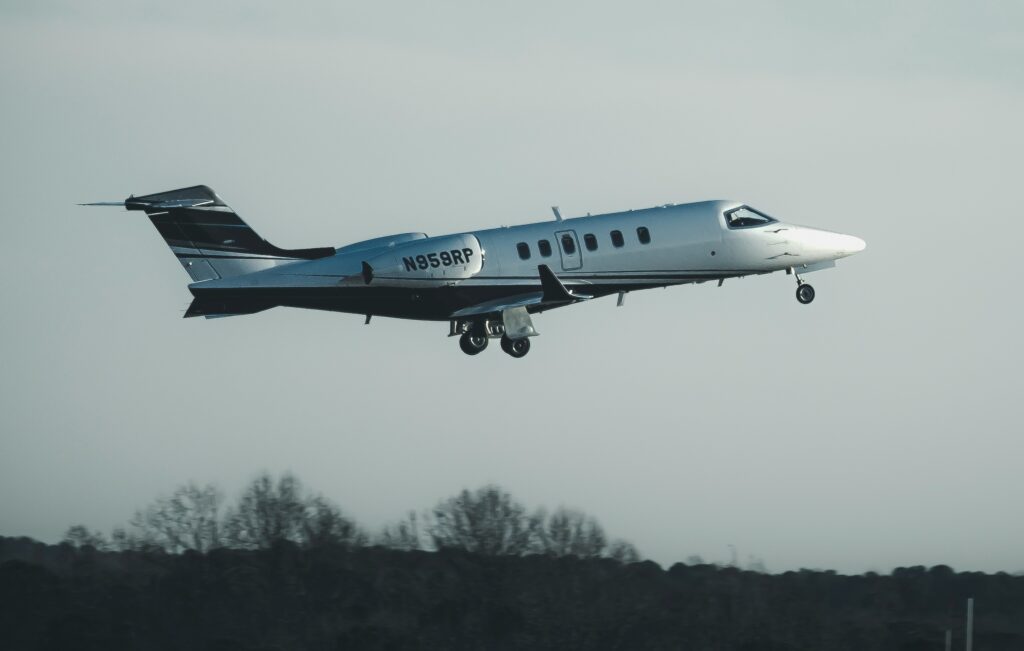
Ask any operator of the 45/75 series what they think of the jet, and you’ll receive largely positive feedback. From handling qualities and performance to operating cost and passenger comfort, the vast majority of operators express admiration for the type’s design and satisfaction with the ownership experience. Nevertheless, some myths circulate. Fortunately, they are easily corrected:
Myth #1: Replacement parts are becoming difficult or will become impossible to obtain.
Among pre-owned business jets, there are certainly some types for which parts availability is challenging. These tend to be types that are either orphaned and whose parent company no longer exists, or types for which an existing manufacturer provides limited aftermarket support. Fortunately, neither of these situations applies to the 45/75 series.
Although production is complete for each model in the series, the parent company, Bombardier, remains an industry leader. Bombardier has the resources necessary to support past product lines and, just as importantly, the willingness to continue investing in those lines to ensure customer satisfaction.
Elite Jet Solutions in Fort Worth, Texas, is one of the top Learjet 45/75 maintenance providers, with significant expertise on each type. Chief Steward Officer Ray Weeks reports that they have no concerns about parts availability and have yet to see any concerning supply chain trends specific to the type that would significantly impact dispatch reliability.
That has been our experience at FXSolutions, as well. Beyond the existing supply chain issues affecting all aircraft types, we haven’t seen any cause for concern with 45/75 parts availability. In addition, we haven’t seen any notable spikes in parts costs beyond standard inflation. Over the next 5-10 years, we don’t anticipate any significant parts shortages and expect parts availability to remain as good as or better than that of comparable types.
Further bolstering part availability are the efforts of companies such as Dodson International and JSSI. These companies purchase older, higher-time airframes solely for parts, retire them from service, and recover usable parts and components. Through this process, the supply chain is replenished, and operators benefit.
Myth #2: Bombardier has no interest in supporting the type.
Among all manufacturers with popular out-of-production types in active service, Bombardier stands out. Rather than grudgingly providing a minimum level of support to these types, as some manufacturers do, the company has demonstrated a strong commitment to the 45/75 series over the years. Most notably, it actively participates in a group of owners and operators known as the Learjet Advisory Committee.
Serving as a formal liaison between Bombardier and Learjet operators, the committee discusses active and emerging issues among the owner group and works together to find solutions. Bombardier engages directly with the group, solicits feedback, and even reexamines existing procedures and limitations to identify opportunities for improvement. Most recently, the group has been reevaluating certain takeoff and landing performance data to ensure they accurately reflect the aircraft’s real-world capabilities.
Led by Jay Pearson, Chairman of the Advisory Committee and Chief Pilot on a Learjet 75, this effort has focused on aligning the published performance numbers with the aircraft’s real-world capabilities. Through documentation, analysis, and close cooperation with Bombardier, these efforts are expected to unlock previously unavailable performance for owners and operators.
We believe this level of commitment to an out-of-production type sets the 45/75 well apart from others, and operators agree. That such a group exists at all speaks to Bombardier’s commitment to the type, and their track record of remaining engaged and motivated to support the owner group has greatly enhanced the ownership experience.
STRENGTHS

The light and midsize segments have no shortage of strong contenders. Factory-new types, in particular, offer the latest avionics suites, the most fuel-efficient powerplants, and stunning interiors. But the Learjet 45/75 offers two compelling strengths – an impressive balance of capability and ownership qualities, and a unique design that bridges the gap between the light and midsize categories.
When examining operating and performance specs of the 45/75 series and comparable types, we can see that the range is around 2,000 miles, fuel burn hovers around 1,100-1,200 pounds per hour at .80 Mach, and the service ceiling is FL510, with most flights taking place between FL410 and FL470.
But when we look beyond raw performance data and examine the factors that shape day-to-day operations, significant strengths emerge. Pilots overwhelmingly praise the series for its excellent handling characteristics and power, and appreciate the advanced Garmin 5000 avionics suite on the 70 and 75. Despite the type certificate encompassing four separate types, one type rating covers them all, with only minor differences training becoming necessary for pilots transitioning between the 40/45 and 70/75.
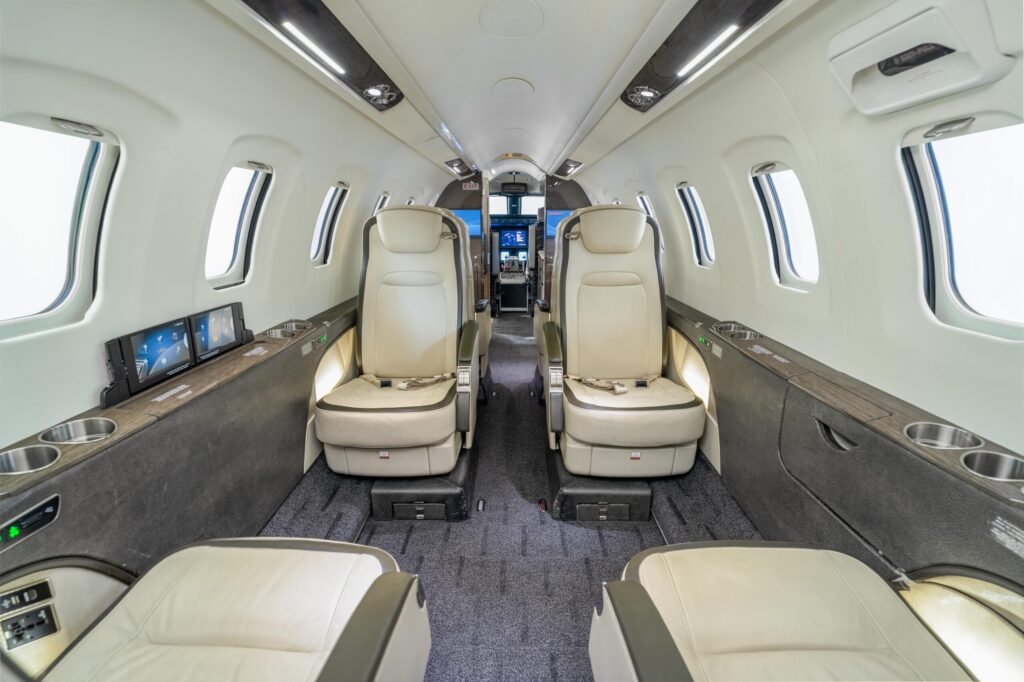
While the entire series typically falls under the light jet category, a couple of unique aspects bridge the gap, effectively positioning it closer to the midsize category. Most notably, the larger 45 and 75 boast a true double-club seating configuration. This differentiates them from most types in the light category, which typically offer a single-club layout with two separate seats. In this respect, the 45 and 75 offer light-jet economy with a midsize cabin experience.
Additionally, all models within the 45/75 series are certificated to FAA Part 25 standards, which govern airliners and transport-category jets. With most types in the light category instead certificated under Part 23 standards that mostly govern smaller general aviation aircraft, this positions the 45/75 series as the “professional grade” alternative.
This means the 45/75 meets more stringent certification standards, and the differences are notable. Compared with most light jets, they must demonstrate better takeoff and climb capability. They also have more “fail-safe” redundancy, superior ice protection, and more robust protection of critical systems such as the fuel lines, hydraulic lines, and the pressure vessel. In short, the 45/75 series is more thoroughly engineered for safety, providing significant peace of mind.
Finally, nothing on the market can provide this balance of capabilities for such a low acquisition cost. Among the various current-production types that approach $12M for pre-owned examples and easily exceed that figure when factory-new, a 45/75 series jet can be purchased for a small fraction of that price.
At the time of this writing, the median price among 18 examples listed on Controller.com is only $2.8M – a figure that easily offsets some of the more incremental ongoing operational cost benefits touted by factory-new types. In today’s market, sales prices for the 40/45 are typically $1.7 – $4M, while the 70/75 can typically be acquired for $4M – $9M.
FINDING THE PERFECT EXAMPLE

As with any type, there are items to look for when seeking out an ideal example for purchase. Some are proactive modifications that will minimize future ownership costs, while others are desirable specifications and useful improvements that will enhance the future ownership experience:
Aileron Service Bulletin
Currently, all types in the 45/75 family are affected by a service bulletin addressing aileron corrosion. While it is not mandatory, aircraft that have had it completed are more desirable on the market, as it could evolve into a mandatory airworthiness directive in the future. Fortunately, the service bulletin provides one-time compliance and will satisfy the future airworthiness directive, should one emerge.
Garmin Phase III Software Upgrade
Available as an upgrade to the 70 and 75, this upgrade unlocks useful capabilities within the already impressive G5000 avionics suite. Initially a $125,000 upgrade, operators report it has come down to nearly half that figure. Some of the potential capability benefits include:
- Vertical navigation
- Enhanced takeoff and landing performance calculations
- Two-way flight plan transfer between apps and avionics
- FANS-1/A+ ATC data link communications
- ACARS
- Streamlined database update capabilities
While not mandatory, this upgrade adds value to an individual aircraft, enhances capability, and improves safety.
Dual UNS-1Ew FMS (40/45 Series)
Aircraft equipped with dual Universal Avionics UNS-1Ew FMSs are desirable, as this equipment provides WAAS and LPV approach capability.
AR Versus BR Engines
While the earlier Learjet 40s and 45s were initially outfitted with Honeywell TFE-731AR engines, many have been upgraded to the TFE-731BR variants. The upgrade is significant, greatly reducing the time required to reach cruise altitude and improving overall performance above 30,000 feet. With the BR engines, the crew simply sets thrust and climbs directly to their optimum cruise altitude.
Because of this performance discrepancy, aircraft equipped with the BR engines command a higher selling price, while those still equipped with the AR engines take longer to sell. The upgrade is particularly desirable now as it is no longer available for unmodified aircraft.
Planetary Gearboxes
The 45/75 series has seen some difficulties with engine gearboxes failing. Initial evidence suggests that when the engine’s fan blades are reconditioned, the surface coating is applied imperfectly, leading to higher vibration levels. The subsequent vibration checks might fall within an acceptable range, but not close enough to perfect to prevent the vibration from causing premature wear on the gearboxes.
While this isn’t something that can be easily confirmed or addressed during a prepurchase inspection, it’s something worth noting when evaluating various aircraft for purchase and reviewing their maintenance logs.
Fuselage Corrosion
A few aircraft have required the replacement of multiple fuselage side panels due to corrosion. The corrosion has resulted from excess moisture building up between the paint and the fuselage skin. This suggests that a layer of corrosion-inhibiting compound was applied incorrectly prior to painting, and it is something to check during the prepurchase inspection.
Engine Programs
Generally, MSP Gold is the preferred engine program in the 45/75 series, although operators report satisfaction with JSSI, provided it offers 100% coverage.
SUMMARY
Overall, the 45/75 series represents compelling value in the light-jet category – not just in its low acquisition cost, but also in its unique combination of Part-25 certification and, among larger types, a useful double-club cabin configuration. Together, the list of strengths effectively positions the series firmly in its own category, spanning light and midsize. Ultimately, some operators call it a “superlight”, but all call it a super value.